Introduction
 |
 AVE
you ever heard any of these questions or
statements? AVE
you ever heard any of these questions or
statements?
• |
“Why do
I keep picking friends who abuse me and abandon me?” |
• |
“Why do
I get so angry with the children? I really love them.” |
•
|
“When I
do really horrible things, it’s like an impulse. There doesn’t
seem to be much thought prior to the action.” |
• |
“I’m
always bumping into things and injuring myself—I don’t understand
it.” |
• |
“I’ve
been working on my dissertation for 10 years now and can’t seem to finish
it. What’s wrong with me?” |
These are the
sorts of things you might hear friends or relatives say. You might even find
yourself saying something similar. These are also the sorts of things clinical
psychologists hear all the time.
And it’s
all because we have an unconscious.
|
You might wonder,
“What is the relevance of psychology to everyday life?” Well, here
is the answer. Like it or not, the unconscious affects every aspect
of our daily functioning, both personal and interpersonal.
Nevertheless,
of all the pages on this website, this page is the most painful and the most
sad, for three reasons:
1. |
Many persons
either don’t believe in the unconscious or don’t think it’s
“relevant.” |
|
2. |
Many persons
who do believe in the unconscious don’t really understand it. |
|
3. |
Those who do
understand the unconscious know that they usually cannot do anything to help
others who are trapped in it, and who refuse to listen to good advice, until
things get very, very bad. |
|
|
|
My goal on this
page is not to provide a detailed theory of human unconscious functioning;
I will instead offer some easily understood information that might make the
subject of unconscious functioning—and its relation to the practice
of psychology—a bit more understandable to the average
person. |
Belief
in
the
Unconscious
|
The first problem with the unconscious is that it
is . . . well, unconscious. That is, by definition the
unconscious represents all that is true, but unknown, about ourselves. So
how in the world can we talk about something unknown?
The
unconscious, therefore, poses a scientific dilemma because it cannot be observed,
let alone validated, through scientific research. It’s similar to the
dilemma found in sub-atomic physics: the observer interferes with the
observation. The unconscious can be understood only indirectly through clinical
experience.
One solution
to the problem, therefore, is for scientists to reduce their own cognitive
dissonance by denying the existence of the unconscious or by not talking
about it.
|
It’s similar
to the time at the beginning of modern medical science when some doctors refused
to believe that bacteria caused infections. Not being able to see with their
own eyes any evidence of “germs,” these men derisively dismissed
the whole concept of bacterial infection. |
|
To a perfectly
logical and rational mind, therefore, the unconscious is just a lot of nonsense.
Persons of this persuasion can often be found telling others to “stop
crying—just pull yourself up by your own bootstraps and get on with
life.”
In psychological
practice, this attitude is most reflected in behavioral
therapy. To be crass, curing a phobia with a purely behavioral treatment
isn’t much different than teaching a dog not to
 pee
on the floor. Yet, to be honest, just as most dogs who live indoors
eventually get housebroken, individuals with phobias can be cured with behavioral
treatment. Many persons might not find it dignified to be trained like animals,
but remember that B. F. Skinner, the originator of a form of behavioral treatment
called operant conditioning, wrote a book called Beyond Freedom
and Dignity in which he argued that autonomous human freedom and dignity
were interfering with social progress and should be replaced with a
“technology of behavior.” pee
on the floor. Yet, to be honest, just as most dogs who live indoors
eventually get housebroken, individuals with phobias can be cured with behavioral
treatment. Many persons might not find it dignified to be trained like animals,
but remember that B. F. Skinner, the originator of a form of behavioral treatment
called operant conditioning, wrote a book called Beyond Freedom
and Dignity in which he argued that autonomous human freedom and dignity
were interfering with social progress and should be replaced with a
“technology of behavior.”
Nevertheless,
just as housebroken dogs will revert to peeing on the floor in moments of
emotional distress, persons who have not made the effort to understand the
unconscious motivation of their past behavior will always be vulnerable to
repeating that behavior.
This all goes
to show that those who say, “Let’s forget about the past and get
on with our future” are deceiving
themselves—unconsciously. |
To
Understand
the
Unconscious
|
Although Sigmund Freud did not originate the idea of an
unconscious, he made extensive use of the concept in his treatment philosophy
of psychoanalysis.
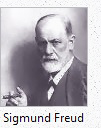 Freud conceived of the unconscious as a sort of garbage
dump for wishful impulses that we would rather not admit to
ourselves. Freud conceived of the unconscious as a sort of garbage
dump for wishful impulses that we would rather not admit to
ourselves.
In contrast,
Carl Jung, who began as Freud’s student, then became a colleague, and
ultimately became an estranged rival,
 distinguished a “personal unconscious” from a
“collective unconscious.” For Jung, the personal unconscious was
similar to the totality of Freud’s concept of the unconscious. But in
the collective unconscious Jung saw images—which he called
archetypes—that were, he claimed, related to personal, cultural, and
spiritual growth. In fact, Jung’s followers have made a sort of
pseudo-religion out of unconscious functioning. distinguished a “personal unconscious” from a
“collective unconscious.” For Jung, the personal unconscious was
similar to the totality of Freud’s concept of the unconscious. But in
the collective unconscious Jung saw images—which he called
archetypes—that were, he claimed, related to personal, cultural, and
spiritual growth. In fact, Jung’s followers have made a sort of
pseudo-religion out of unconscious functioning.
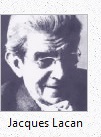 I studied Jung in depth for almost a decade, but ultimately I
discovered that another
psychoanalyst, Jacques Lacan, understood
the unconscious better than anyone. Lacan, a brilliant French psychoanalyst,
emphasized the relation of language to unconscious functioning. Language,
being metaphoric and symbolic, is one step—one large step—removed
from “reality,” and in the gap between the the real and
the symbolic is all the deception,
lies, and fraud of
human social existence. I studied Jung in depth for almost a decade, but ultimately I
discovered that another
psychoanalyst, Jacques Lacan, understood
the unconscious better than anyone. Lacan, a brilliant French psychoanalyst,
emphasized the relation of language to unconscious functioning. Language,
being metaphoric and symbolic, is one step—one large step—removed
from “reality,” and in the gap between the the real and
the symbolic is all the deception,
lies, and fraud of
human social existence.
|
The
Realm of the Real is the place
of our essential fragmentation, vulnerability, and
death. It’s the “place” where we find
ourselves wounded and helpless. To most persons, it’s a terrifying place,
and so most persons will do most anything to hide this reality from their
own awareness. In fact, that’s the psychological function of a
symptom: to hide a horrifying reality behind mental and physical
manifestations such as addictions,
anxiety,
depressed mood, insomnia, lethargy,
nightmares, weight
gain, and so on.
|
|
|
The
Realm of the Symbolic is the realm
of language. The truth is, when terrifying things happen to you, that
is reality, but if you learn to voice your pain
honestly in language, horror can be given
containment. But, more often than not, most of us
fail to achieve honesty in life; we remain stuck in our psychological defenses,
leaving our real emotional pain unexpressed. |
|
As humans, we cannot
communicate directly mind-to-mind or soul-to-soul. We have to rely on symbolic
communication. Consequently, the Realm of the Symbolic is the realm of language.
Language, however, cannot express the fullness of reality, and so much of our
experience goes unspoken. No matter how much we say, and no matter how eloquently
we may say it, some aspect of our reality fails to get communicated. Therefore,
although it might seem, on the surface, that our lives are structured simply by
conscious thought and speech, we are actually more influenced by that gap between
the real and the symbolic—or, in other words, by what is “missing” from our lives
simply because we must filter all our raw experience (the Realm of the Real) through
our social dependence on the imperfection of language (the Realm of the
Symbolic).
Therefore, the
unconscious is a side-effect, so to speak, of our separation from raw reality
because our use of language fails to adequately express our reality. Lacan saw
clearly that, because separation and lack lead to desire, the unconscious is
primarily governed by “the desire of the Other”—that is, by the social world
(the “Other”) around us that is lost in its incomplete expression of reality.
Consequently, desire can be described as the unspoken—and hidden—aspect of our
speaking lives.
Now, as I said
earlier, “How in the world can we talk about something hidden and
unknown?” Well, what is missing—or hidden in desire—can be
“mapped out,” so to speak, through a keen analysis of how a person
speaks about his or her life and problems.
When, under the
guidance of someone trained to interpret the unconscious, you learn to voice
your pain openly and honestly in language, you
enter into a psychotherapeutic aspect of the Realm of the Symbolic, and horror
can be given containment. Learning to speak about
pain and terror provides a sense of safety through a compassionate
acceptance and “taming,” as it were, of your “wild”
unspoken—and secret—thoughts and feelings.
Thus it truly
becomes possible to draw wisdom from pain and tragedy. For example, as a
result of talking about dreams, or of exploring
mental associations of one thing to another, an image can be formed of the
hidden desires that may be motivating your self-defeating
behavior.
|
A Metaphor
Imagine, for
example, someone writing on a note pad. The sheet of paper with the writing
is then removed. But if you rub across the surface of the next blank sheet
with the side of a charcoal crayon, the writing—impressed into the second
sheet from the pressure of the pen on the top sheet—appears as empty
strokes amid the charcoal blackness on the surface of the paper. In a
similar way, the language of unconscious motivation can be discovered indirectly
through the associations that surround it.
A Case Example
In a clinical case,
I saw a man who had been suffering for three months
from daily cramps and vomiting at two hour intervals. His physician and a
gastroenterologist were baffled. Medication had little effect. Eventually
he was referred to me for psychological treatment.
I told him we weren’t going to “get rid” of the vomiting;
we were going to listen with compassion to what it had to tell him. So we
explored his associations to the vomiting. From the violence in the neighborhood
that seemed to trigger the vomiting, to the physical beatings and sexual
abuse from his childhood, to the numerous rejections and refusals to give
help that he encountered throughout his life, to his anger that he had to
achieve his college education without family support, and on to his recent
acceptance in graduate school, we “mapped out” his associations.
In the end, after three sessions of intense psychological exploration, he
was able to recognize that he was terrified of beginning graduate school.
Through his tears, he put that terror—all the unconscious terror
of his entire life—into words for the first time.
“So what will you tell the part of you that wants to vomit?” I
asked.
“I’ll say: OK guys, you can relax. I get the message. I’m
terrified of starting school.”
Three days later he woke to these words of a dream: “The dictator has
stepped down.” Not killed, not assassinated—but willingly
resigned.
And the vomiting stopped.
Thus, a string of encounters with rejection “told” this man that
he didn’t have the right to exist, but ultimately this particular
desire—the unconscious desire to fulfill the Other’s voice and
sabotage his education—was dissolved. |
|
|
Unconscious
Defense
Mechanisms
|
We are all constantly being “assaulted” by others
around us in their desires to get from us what will most benefit
their self-interests. And so the unconscious motive to satisfy others
will often conflict with our basic need for self-preservation. Moreover,
in addition to these social demands, the physical world around us often assaults
us through accidents and natural disasters. Therefore we all must deal with
emotional conflict or internal or external “assaults” on our
well-being.
Common
ways of protecting ourselves emotionally were called mechanisms by
Sigmund Freud. When seen in pathological settings, these mechanisms can
technically be called defense mechanisms; when seen in everyday life,
they can be more properly called dynamic mechanisms. Modern psychiatry,
however, uses the term defense mechanism in both pathological and
everyday
settings.[1]
|
Unhealthy defenses
often become a focus of psychotherapy in the quest
to overcome inhibitions to emotional genuineness. Through the hard work of
psychotherapy you can learn to bring into conscious awareness all the threatening
thoughts, feelings, memories, wishes, and fears pushed out of consciousness
by your defenses. Once these inner experiences are properly understood
consciously, you can begin to live an emotionally open and
honest life. |
|
Healthy
Defenses
It’s important
to understand right from the beginning that not all defense mechanisms are
“bad” or unhealthy. Some defense mechanisms allow for self-protection
while maintaining a full awareness of the thoughts and feelings involved
in dealing with the challenge facing you.
Anticipation. You think ahead to events that might occur in the future
and consider realistic responses or solutions.
Affiliation. You seek out others for emotional support or physical
help.
Altruism. You do good and kind things for others, rather than worry
about your own immediate satisfaction or fears.
Humor. You notice the amusing or ironic
truth of something.
|
Some individuals,
however, use humor as an unhealthy way to avoid conflict. From
the way they speak, you might get the impression that these persons are always
good-natured and happy, because they are always laughing. But if you listen
closely to that laughter, you can hear any of three things.
1. |
|
You might hear
a “ha-ha-ha” sort of giggle at the end of every sentence. This
giggle has the subliminal psychological effect of
avoiding conflict by telling the listener,
“I’m really frightened of conflict, so please
don’t take seriously anything I say, lest you be offended by it and
want to challenge me.” |
| |
|
|
2. |
|
Or, you might
hear a person say something such as, “Oops, I almost spilled the coffee
all over you. Tee-hee-hee.” In this case, the laughter is used to
disguise an aggressive impulse. For example,
this person could be carrying so much residual childhood resentment in her
heart for the way her parents mistreated her that the thought of her now
causing someone else to suffer provides an unconscious satisfaction for the
injustices she had to suffer as a child. Thus her laughter reveals the truth:
that she would very much take unconscious delight in spilling coffee all
over you. |
| |
|
|
3. |
|
Or, you might hear
someone giggle while speaking about a scandalous topic. In this case, the giggle
reveals that although she is saying that the topic is scandalous, she really
desires to do it herself. |
| |
|
|
|
|
Self-assertion. You act toward others in a way that is emotionally genuine
and honest and that is not coercive or
manipulative.
Self-observation. You reflect upon and consider your
emotions and thoughts,
so as to act responsibly.
Sublimation. You direct socially harmful impulses into socially acceptable
forms of behavior.
|
Keep in mind,
though, that some forms of sublimation, such as playing violent video games,
although socially acceptable, can still be psychologically unhealthy because
the behavior breeds a pernicious desire for anger and
revenge. |
|
Suppression. You avoid thinking about disturbing experiences or
feelings.
|
Done in moderation,
and in the proper circumstances, this can be healthy and protective. But
in excess it becomes avoidance, one of the characteristic symptoms
of post-traumatic stress disorder. |
|
Inhibitory
Defenses
This sort of
defensive functioning serves to keep threatening thoughts, feelings, memories,
wishes, or fears out of conscious awareness.
Displacement. You transfer your feelings about one object to another,
less threatening object. For example, a man angry
at his boss comes home and yells at his children.
Dissociation. You separate yourself from reality by a breakdown of normal
conscious functions of memory or
identity. For example, in a car crash you don’t
feel like you’re experiencing it yourself, or you don’t feel like
you’re experiencing it in your body, or you develop amnesia about the
final moments of the crash.
Identification. As a normal childhood developmental process of taking in
of experience symbolically in order to identify with other persons (especially
parents), this is often called introjection. But identification can
also have a defensive function, as in identification
with the aggressor.
Intellectualization. You focus on abstract logic or philosophy and minimize feelings
about an event. For example, after an earthquake damages your home, you talk
to others primarily about the structural engineering factors of the
damage.
|
For example, children
of alcoholic parents more often than not grow up in an environment of lying,
broken promises, arguing, and violence. To cope with such emotional volatility
and chaos, some children learn to run away and hide. They fear emotions as
something dangerous. Because the dysfunctional family system cheats them of the
ability to deal with emotions, the children spend their lives dampening all their
emotional reactions, dwelling in the realm of logic and reason. |
|
Isolation
of Affect. You remain aware of the descriptive
details of an event but lose connection with the feelings about the event
itself.
Reaction
Formation. Your behaviors, thoughts, or
feelings are the complete opposite of your actual (unconscious) desires.
For example, you dislike your job and yet you tell everyone how wonderful
it is.
Repression. You lose all conscious memory
of an event (in contrast to dissociative amnesia, in which selective elements
of an event are “forgotten”). Also, in repression you may retain
certain emotional components of the event even though you have no conscious
memory of the event. For example, a woman who as a child was sexually abused
by her father may feel anxious and uneasy whenever finding herself alone
in a room with an older man, even though she cannot remember the childhood
abuse itself. (Note, however, that this emotional component in itself does
not prove that any abuse ever happened; a woman might feel anxiety
around older men for unconscious reasons other than abuse. For example, she
might be trying to ward off her anger at her father for being intellectually
critical of her as a child, and not being present to her as a compassionate
teacher.)
Undoing. You use symbolic means to negate or make amends for unacceptable
thoughts or feelings. For example, you repetitively wash your hands as an
unconscious gesture of “washing away” the
guilt of feeling angry at someone you depend
upon.
Distorting Defenses
(minor)
This sort of
defensive functioning serves to distort images of self or body or others
in order to regulate self-esteem.
Devaluation. You tell yourself that something desirable but immediately
unattainable is somehow defective. For example, the fox in Aesop’s fable
tells himself that the grapes out of his reach are probably sour. Hence the
expression “sour grapes.”
Idealization. You attribute exaggerated positive qualities to an
other.
Omnipotence. You feel or act as if you possessed special powers or abilities
superior to others. For example, a child left alone in the house every day
after school by working parents fantasizes that he is a comic book
superhero.
Defenses Involving
Disavowal
This sort of
defensive functioning serves to keep unpleasant or unacceptable thoughts
or feelings out of conscious awareness. In contrast to inhibitory defenses
(see above), which attempt to hide unpleasant thoughts or feelings,
defenses involving disavowal attempt to negate reality in some
way.
Denial. You refuse to acknowledge what is readily apparent to others.
The classic example here is an alcoholic who will dispute any
suggestion that he is dependent on
the use of alcohol.
|
When you’re
in denial, the truth is your enemy and your accuser. |
|
Projection. You falsely attribute to others your own unacceptable feelings.
Projection, however, isn’t always just a simple role reversal whereby
you, for example, believe that someone is angry with you when you are really
angry at that person. Projection often involves such a disavowal of feelings
and memories that your perception of truth becomes distorted. For example,
when you believe that your boss is fed up with you, it doesn’t necessarily
mean that you are fed up with your boss; the truth could be that you are
fed up with something in your work environment, or even in your home environment,
and aren’t even aware of it. Thus when the defense of projection rules
your life, you experience a profound lack of awareness of your own
reality.
|
The great granddaddy
of all projection is the belief that God hates you, whereas the reality is
that you hate yourself. |
|
Rationalization. You conceal your true motives by making incorrect, self-serving
explanations. For example, a parent beats a child, saying that it is not
abuse because “That’s how my father
disciplined me.”
Distorting Defenses
(major)
This sort of
defensive functioning involves gross distortion in images of self or
others.
Autistic
Fantasy. You withdraw into excessive daydreaming
(or playing video games), building up an inner fantasy life at the expense of any
meaningful encounter with the real world.
Projective
Identification. As in projection,
you falsely attribute to others your own unacceptable feelings, but here
you remain aware of the feelings yet believe they are justifiable reactions
to another person. For example, you feel angry that
you have been assigned to work on a project, but instead of recognizing your
resentment, you start to feel angry with a co-worker, believing that
she lacks commitment to the project.
|
This sort of
behavior can lead to what is called a
self-fulfilling prophecy. For example,
an insecure person who is intensely afraid of abandonment can so often impute
feelings of infidelity into others that they eventually get sick of such
suspicion and criticism and end up actually abandoning him or her.
This whole process
gets started when you are mistreated as a child in your family. Not being
able to make sense of this irrational abuse, you tell yourself, “It’s
all my fault.” Then, firmly and repetitively
believing that everything is your fault, you begin to expect abuse—and,
sure enough, that expectation draws hurt to you like iron to a
magnet.
Stopping
Self-fulfilling Prophecies |
|
1. |
|
Begin by accepting
the fact that, when you were a child, others inflicted their own internal
unconscious conflicts on you and that you were not to blame for their
hostility. |
|
|
|
2. |
|
Then you can
stop believing that you “deserved it.” |
|
|
|
3. |
|
Then you can
stop hating. You can stop hating others
for being so mean to you; you can do this by having compassion for their
suffering in their own unhealed emotional pain, and you can
forgive them for their blindness and failures.
And you can stop hating yourself for being unable to fix things. |
|
|
|
4. |
|
Then you can
stop letting your own emotional resentments unconsciously contribute to the
emotional chaos of the world around you. You can say, “From now on,
I will do everything I can to seek to understand others, to seek their good,
and to help them heal from their emotional pain.” |
|
|
|
5. |
|
Then you can
stop unconsciously wishing to punish yourself. |
|
|
|
|
|
|
|
Splitting. You see everything as either all good or all bad, sometimes
alternating between the two in regard to one person.
Defenses Involving
Action
This sort of
defensive functioning involves action or withdrawal.
Acting
Out. You use physical actions instead of
dealing with challenges directly by reflecting on and speaking about your
feelings. For example, a man has an extramarital affair because he cannot
verbalize his feelings of frustration or helplessness within the
marriage.
Apathetic
Withdrawal. You simply withdraw from interaction
with the world rather than deal with its assaults and and challenges by taking
effective action through loving service to others.
|
This dynamic
is a key component of all addictions. Feeling the lack of
real love from your parents, you turn to
your own self-satisfaction through substances (e.g., alcohol, nicotine,
marijuana, cocaine, etc.), through behaviors (e.g., gambling), or through
your own body (e.g., erotic pleasure) as a way to avoid giving real
love to others. |
|
Help-rejecting
Complaining. You make a show of asking for help, yet
because of unconscious resentment for all the help you have not received (especially
from your parents) you reject all help or advice that is offered to you. For example,
a woman who suffers from bereavement begins to feel depressed and lose weight. A
neighbor brings some yogurt as a comfort food, but the woman complains that she
only eats goat’s milk yogurt; a physician prescribes medication, but the woman
stops taking it because she doesn’t like the way it makes her feel; a psychologist
offers psychotherapy, but she complains that the office is too far away—and so
on.
Passive
Aggression. You present a façade of compliance,
yet, because of hidden resentment—that is, unconscious anger (often anger at your
father)—something always “happens”: you get sick, the bus is late, your car breaks
down, and so on. The end result is that the task is obstructed, but the obstruction
has happened in such a subtly obscure manner that no one can accuse you of directly
interfering with the task. Hence you get all the satisfaction of thwarting the plans
of others while avoiding any responsibility for your actions.
|
“Wait a
minute,” you say. “It’s not my fault that the bus was late.”
Well, that may be true in some circumstances, but we’re talking here
about things—one thing or another—that happen over and over again
to frustrate the plans of someone else. And this frustration is a sort of
veiled retaliation, a quiet unconscious revenge for something someone has
done that hurt you. It could be very possible that you “knew”
unconsciously just how much of a delay it would take to miss that bus, and
you “knew” that you could be late. Thus, rather than catching the
bus before the bus that will get you there on time, so as to guarantee
not being late, you ignore the warning signs, “knowing” with a
secret satisfaction what will happen. In fact, the satisfaction may be so
secret that even you don’t recognize it. It may sound weird, but as
is often said, “Life is stranger than fiction.” |
|
|
Health
Problems
and
the
Unconscious
|
It can make many persons feel uncomfortable to hear it
said, but many health problems derive from unconscious conflicts.
“No!” they object. “This is not how I want to think of
myself, that I am so repressed that I caused myself
a great deal of pain and aggravation.”
Repression, however,
is not really something to be embarrassed about; it’s simply a fact
of life. We have an unconscious because we use language; that is, because
we can never speak our experiences completely, something always remains unsaid
and unconscious. And then, on top of this, whatever feelings and experiences
we are afraid to express openly and
honestly can be repressed and added to the general
reservoir of our unconscious.
Ultimately, though,
this repressed experience will
“leak
out” in one way or another:
slips of the tongue; procrastination; repetitive
self-sabotage; hostile comments to others that just
blurt out of our mouths; aggressive actions—and
health problems.
But, if we have
some curiosity about the unconscious and seek to
understand it, rather than treat it with indifference
and contempt, we can improve the quality of our lives—mentally, spiritually,
and physically. Recognizing psychological causality will not necessarily cure an
illness, but it can prevent the experience from becoming a trauma,
and it can facilitate healing. |
Working
with
the
Unconscious
to
Facilitate
Psychological
Change
|
A
MAN goes to his physician and says, “Doc, I think I’m
losing my memory.”
“Hmm. How long has that been going on?” the physician
asks.
“I don’t know,” the man replies. “I can’t
remember.”
This joke illustrates
the fact that many aspects of our lives are simply not accessible to conscious
thought processes. The basic physiology of the body, such as internal temperature
or immune protection is one example. Memory, when it goes awry is another
example.
So it is
with the psychology of the unconscious. If most persons were asked, “Do
you have any unconscious anger at your parents?” they would likely respond,
“That’s ridiculous!”
Therefore, the
unconscious can be examined only indirectly, through linguistic associations,
dreams, and behavioral clues. Any attempt to approach
the unconscious directly (such as by asking, “Do you have any unconscious anger
at your parents?”) will be met with fear and
denial.
Nevertheless,
many beginning psychotherapists, as well as most persons in the general public,
share a common misconception. They accept the belief that “our lives are
structured simply by conscious thought and speech,” and so they assume that
if we are just told what is wrong with us we will immediately want to remedy
the problem. Sometimes, when some highly motivated persons are told about their
mistakes and failures, they will immediately want to change. But often such advice
provokes defensive resistance, and so the attempt to be helpful has no helpful
effect at all.
The
problem with unconscious conflicts is that you can’t cure someone just
by telling him or her what’s happening
unconsciously. In fact, an attempt to do this
can have some dramatic and ironic effects.
|
“What
do you mean I get angry and break off relationships
when people say things I don’t like? I’m a loving, open
person. And to think I wasted my money on an idiot therapist like
you. Good riddance, you [expletives
deleted]!” |
|
|
“What
do you mean I’m prone to hostility and violence? I demand an apology
right now or the streets will flow with your blood!” |
|
There you go;
they prove the point by trying to deny it. But it does them no good.
They’re caught in the closed circle of unconscious
repetition.
Unless a person
asks for help and is willing to listen to it, there’s nothing you can
do. This is the pain felt by family members watching an alcoholic, for example,
on the path to slow suicide. You can only pray
that such persons eventually hit bottom—and that the force of the impact
won’t be fatal, but that it will be sufficient to crack open their hardened,
angry hearts to let in the light of truth.
And when that
hard heart does crack, the first thing it feels is sorrow—sorrow for
all the injury and pain it has inflicted on others while stuck in its own
blindness. It no longer blames others for its own misery; instead, it sees
the ugliness of its own behavior for what it is.
And so it can
be said that the only basis for lasting psychological change is
sorrow.
Here is a comparison
of sorrow with blame:
Sorrow |
Blame |
An acceptance of responsibility for
how your behavior affects others. |
A frustrated focus on how others’
behavior affects you. |
An honest
openness to all the facts of the moment. |
A defensive clinging to old, illusory
images of identity. |
A charitable focus on
hope and growth. |
A helpless focus on resentment. |
Based in
forgiveness. |
Based in
wanting to make others suffer because of what they did to you. |
|
Once you do feel
sorrow for past behavior, there are several steps to psychological
change:
•
|
Recognize
the injurious act and admit it
openly. The specific meaning of
“openly,” of course, will vary with circumstances. It might mean
“coming clean” to a spouse or friend; it might mean confessing
in prayer; it might mean being honest with a
psychotherapist. |
• |
Recognize
your personal “lack” that contributed to the injurious act in the
first place. Again, the specific meaning
of this lack will vary from circumstance to circumstance. It’s often
a matter of fear: fear of saying “No,” fear of setting limits,
fear of appearing foolish or ignorant, and so on. But it could be a matter of
habit derived from family dysfunction in
childhood. |
• |
Promise
to remedy your lack. Note that this
is not a promise that you will “never do such a thing again,” because
that would be a wild promise that could easily be broken. No, you must go
deeper; you must promise that you will do whatever it takes to get to the
roots of the behavior itself and alter things for the
better. |
• |
Learn
from the past. “You can’t
bring the dead back to life. You can’t change the past.” These
are both true and accurate psychological statements. But with true sorrow
you can learn from the past and change your behavior in the present so that
you don’t “kill” again. No matter what “evil” you
have done in the past, the heaviest penalty you can pay for all that damage
is to make a true psychological change and dedicate yourself to doing good
from now on.
Some persons
choose suicide as a penalty for a confused and
injurious life. But really, suicide is a psychological “crime”
unto itself. Why? First, because it cuts you off from any healing you might
attain because of psychological change. Second, it cuts you off from all
the good that you could do, for the rest of your life, as true payment for
your past mistakes. Third, it is in essence an act of
hatred, by which you throw evidence of your failure
into the faces of those who failed you, as proof of their
failures. |
|
Letting
Go
of
Old
Defenses
|
You might ask, “So what can I do to let go of old
psychological defenses?”
To answer this
question, let’s use a simple example from everyday life. In order
to let go of something, you first need to pick it up. For example, you
can’t let go of a rope that is lying on the ground. If you want to let
it go, it has to be in your hand. It doesn’t matter how long it has
been in your hand or when you first picked it up; all that matters is that
you know that you are holding it now.
Psychology works
in a similar way. If you want to let go of something, you first need to pick
it up. But what does it mean to “pick up” something psychologically?
What does it mean to know that you are holding on to a dysfunctional behavior?
Well, “to pick up something psychologically” means that you understand
its psychological purpose.
|
Defenses get
created in childhood to protect us from emotional hurts inflicted by our
environment (parents, siblings, friends, and others). Because a defense’s
original purpose is protective, it will be necessary, if you want to overcome
that defense now as an adult, to understand how the defense is trying to
protect you. In this regard, think of the defense as a child who feels
suspicious, confused, and frightened. If you try to force a frightened child
to do what you want, you will get only resistance and opposition; the only
way to get past the opposition is to understand the child’s fear while
also understanding how the child’s behavior seems, to the child, to
be protective. Then negotiate with the child to establish new behaviors that
can protect you both in a healthy, emotionally honest manner. |
|
Therefore,
to change dysfunctional behavior, it can be helpful to acknowledge and respect
its original purpose. Because all dysfunctional
behavior derives from childhood psychological defenses,
and the whole point of a defense is to protect you, respecting that original
protective purpose of a defense, rather than just getting rid of the
defense, will aid you in changing your behavior without invalidating all
the skills and talents that the defense has used so far in its attempt to
protect you.
Here is an example
of how that process can be outlined.
• |
Identify the problem
and your feelings.
I want to go to university, but I feel
anxious and afraid.
|
• |
State the negative
beliefs underlying your feelings.
“Wanting
anything is selfish.”
“I’m not worthy.”
“I don’t matter.”
“I don’t deserve to have any ambitions.”
“I will never succeed at anything.”
|
• |
Identify the
“voice” behind the negative beliefs. That is, is it the voice
of your mother or your father or someone else?
It’s the voice of both my mother
and my father. It’s my father because, as an alcoholic, he passively
hid from taking responsibility in the family. It’s the voice of my mother
in her anger at herself and at us children because
of my father’s selfish passivity.
|
• |
State the original
purpose of the negative beliefs.
They protect me from feeling hurt
by my father when he got drunk and broke his promises.
|
• |
State the
“voice” of the original protective purpose.
“You have a right to feel afraid.
Staying hidden has kept you alive all your life. If you expose yourself now,
you will be destroyed!”
|
• |
Acknowledge the
“voice” of the original protective purpose.
“I understand how much you fear
betrayal. My father’s broken promises hurt deeply. But now there are
other means of self-protection available that you didn’t know about
in childhood. I can learn about them and use them.”
|
• |
Dispute—that
is, make a rebuttal to—the negative beliefs.
“Yes, having ambition is partly
selfish, and yet it can also be of use to
others. It’s also true that if I get a university degree it will enhance
my self-esteem and my prestige,
and yet it will allow me to do better work
than I can do now. So if I go to university, everyone can benefit.”
|
• |
State how the
rebuttal still fulfills the original purpose of the negative
beliefs.
Going to university will protect
me from getting hurt; that is, it will protect me from the hurt of
“burying” my true talents.
|
• |
Predict how you
will feel—and why you will feel that way—if you carry out your
rebuttal.
I will feel sad because it will remind
me that my father really wasn’t there for me.
|
• |
Validate the
underlying truth of those feelings. Then feel the pain as you experienced it
as a child. Note that the previous points can
be discovered relatively quickly through logic and intellect. This point
requires some deep, emotional introspection and for that reason it is often
the core work of psychotherapy.
“I felt very sad all throughout my
childhood because I was constantly disappointed by my alcoholic father.” Yes,
say it, and then feel what the child felt at the time.
|
• |
State how those
feelings can now be a positive motivation.
My sadness that my father wasn’t
there for me can be an incentive for me to “be there” for someone
else.
|
• |
Make positive
affirmations about your decision.
I will protect myself by going to
university. I will learn how to be assertive and to protect my boundaries. I
will make my best effort. I will not sabotage myself. I will “be
there” for myself to validate my own emotional experiences,
and I will “be there” for others.
I will never forget the betrayal inflicted on our family by my father, yet
I will work to forgive him rather than get stuck
like my mother in thoughts of resentment.
|
|
Some
Helpful
Points
about
Working
with
the
Unconscious
|
Below are some helpful points about working with the
unconscious.
The
unconscious controls you—you cannot control
it. The unconscious is the totality
of the truth of your being. Fighting it or denying it takes you nowhere.
All you can do is cooperate with it.
|
No matter how
much you may be convinced that your behavior is determined by your conscious
motives, you are still subject to unconscious motivation. You may respond,
“I get what you say, and I agree that it may be true for others. But
I just don’t feel that this applies to me.” Well, that response
in itself is a form of unconscious denial.
|
|
The
psychotherapist’s proper job is to facilitate things so that the problem
emerges from within the client’s own experience in the client’s
own unconscious language. Being told,
for example, that you unconsciously resent your children, is one thing—and
it’s easily denied; dreaming that you try to
kill one of your children is shocking, and, if properly interpreted, is
undeniable evidence of a resentment that needs to be verbalized. Even waking
actions which seem to be nothing but “mistakes” can reveal some
dark secrets.
|
A woman stands
in her kitchen, chopping onions. Her son rushes in. He has been “bad”
again. His mother glares at him. Angrily, she shakes her hand at him as she
accuses him—not even aware that she still holds a long, sharp knife.
What does the boy “see”? He sees his mother threatening him with
a knife. And he will be psychologically wounded for the rest of his life
by that horrible realization that his mother could be so displeased with
him as to threaten to kill him.
What was the mother really thinking? No one knows. Maybe she was primarily
angry at her husband for having an affair with another woman, and her son
found this anger transferred to him. And maybe the son was “bad”
because of an unconscious identification with his father’s betrayal
of the family. We can never know exactly how unconscious conflicts will entangle
an entire family. We just know that in this case the mother’s anger
and hostility showed themselves more clearly to her son than she would
have been willing to admit consciously.
She might claim it was all a mistake. But it was really an
encounter with something very
real.
|
|
Even
though a rational explanation for a symptom may be discovered, there can
still be another unconscious “cause” for the
symptom. In his philosophy, Aristotle
(Physics, ii, 3) described several different types of causes that
are relevant even today.
•
|
The
material cause refers to “that out
of which a thing comes to be and persists.” In this sense, for example,
the steel and concrete and glass—the materials—are the cause of
a building. |
• |
The
formal cause refers to the form—or
plan, or pattern—by which the essence of something is stated. In this
sense, the design and blueprints are the cause of a building. |
• |
The
efficient cause refers to “the primary
source of the change or coming to rest.” In this sense, the construction
company is the cause of a building. |
• |
The
final cause refers to “that for
the sake of which” a thing is done. In this sense, corporate business
profit is the cause of a building. |
Now, as Aristotle
himself said, “it follows that there are several causes of the same
thing.” In psychological practice this means that symptoms of
depression, for example, which might be caused
by a chemical imbalance in the brain (material cause), can, at the same time,
be caused by repressed anger (final
cause).
Psychologically,
locating and treating this unconscious final cause of the symptoms can be
the most critical aspect of the treatment because it can have a curative
effect on the other causes as well. Treating only the material cause,
however—as if it were the rational and only cause—will leave
the final cause untreated and free to exert its influence through
repetition.
The
more you feel convinced that something is NOT a problem, the greater
the likelihood that it IS an unconscious
problem. You might say, “What
do you mean, anger? I’m not angry with my parents!
I’m certain of that!” Well, watch out—you’re fooling
only yourself. And, while we’re on the subject, you might say,
“I’m not lying to myself! That’s
ridiculous!” Well, you have a bit to learn about
psychology . . .
Ego
states are not an explanation of the unconscious; they are simply a symptom
of it. Nevertheless,
ego states can be useful in working with the
unconscious.
No
unconscious problem deserves to be gotten rid
of. All problems need to be treated
with compassion and respect. In fact, the part of you caught up in today’s
problem probably served to keep you alive in the past. Once you come to terms
with its unconscious “message” it can quietly retire, or it can
find a new, healthy protective role in your life. But if it is “killed
off” its wisdom is lost with it. |
Surrender
to
the
Unconscious
|
WALKING
to my office, I hear a voice behind me on the sidewalk. “Excuse me,”
he says. I turn and look at him. “Do you have the time?” he asks.
“No,” I reply. “Time has
me.”
My answer reveals
that I am a psychologist—and not only that, but a psychologist who
understands his job.
The truth is,
just as time is not something we can ever possess, even though we try to
fool ourselves by “wearing” it on our wrists like jewelry, the
unconscious, too, is something we cannot possess or control.
Still, we try
to control the unconscious by numbing it with ceaseless
activity, entertainment, sex, and drugs and by pushing it aside with political
power, financial wealth, and social status. Nevertheless, the unconscious
will find its way to leak out in anxiety, insomnia, embarrassing slips
of the tongue, accidents, or
self-sabotage,[2]
or to erupt in physical or mental illness.
So long as you
insist on believing that you are in control of your life,
your unconscious will be in control of you.
Consequently,
your best recourse is psychotherapy where the reality
of the unconscious can be noted and respected—and the only way to respect
the unconscious is to surrender to it.
Now, what does
this mean to “surrender to the unconscious” in psychotherapy? Well,
this means that you
1. |
Think of the unconscious
as the truth of your existence, not as some unwanted and
feared obstacle to happiness; |
2. |
Show curiosity for
this truth and welcome its attempts to reveal itself to you in
dreams, free
associations, and unexpected
encounters; |
3. |
Trust that your welcoming
this truth into your conscious awareness will set you free from the futile
and depressing anxiety of hiding from yourself,
your psychotherapist, the world, and life itself. |
|
The
Book
|
 Psychology from the
Heart Psychology from the
Heart
The Spiritual Depth of Clinical Psychology
A collection of
texts from the writings of
Raymond Lloyd Richmond, Ph.D.
More
information |
Gratitude
|
Has this web page been helpful? Then please help support this
website in gratitude, as a “down-payment” on the success of your
hopes and dreams!
|

Notes:
1.
American Psychiatric Association: Diagnostic and Statistical Manual of
Mental Disorders, Fourth Edition. Washington, DC: American Psychiatric
Association, 1994. See Appendix B: Criteria Sets and Axes Provided for Further
Study, Defensive Functioning Scale (pp. 751–757).
2.
Keep in mind that unconscious self-sabotage is not always a matter of harming the self;
instead, it can be a matter of your unconscius telling you, through its obstruction of
your plans, that you are currently trying to do something that is “wrong”—that
is, that you are currently trying to do something that is not in accord with what you
really need. Hence sabotage can be an unconscious corrective mechanism rather than a
mechanism of self-harm.
Additional
Resources
Cognitive-Behavioral
Therapy:
Albert Ellis Institute
provides information about Rational Emotive Behavior Therapy:
self-help, therapist referrals, workshops, lectures, training, and
publications.
Beck Institute for
Cognitive Therapy and Research provides information about
Cognitive Therapy: workshops, lectures, training, and publications.
The National Association
of Cognitive-Behavioral Therapists provides current information
concerning cognitive-behavioral psychotherapy, including a searchable National
Referral Database of certified cognitive-behavioral therapists.
REBT FAQ
— Questions and Answers about Rational Emotive Behavioral
Therapy from the Albert Ellis Institute.
Questions
& Answers about Cognitive Therapy from the Beck
Institute.
Control-Mastery:
San
Francisco Psychotherapy Research Group provides information about
Control-Mastery therapy, which emphasizes an individual’s attempts to
master and overcome unconscious conflicts.
Hypnosis:
Milton
H. Erickson Foundation provides information and training in the
style of hypnosis used by Dr. Erickson, who was a master at healing unconscious
conflicts.
Society of
Psychological Hypnosis
Jungian Analytical
Psychology:
C. G. Jung Home
Page provides information about Jungian training and treatment.
Lacan:
Jacques Lacan. Écrits: A selection, trans. Alan Sheridan
(New York: W. W. Norton, 1977)
Jacques Lacan. The Four Fundamental Concepts of Psychoanalysis, trans.
Alan Sheridan (New York: W. W. Norton, 1981).
Psychoanalysis:
Academy
for the Study of the Psychoanalytic Arts —“To advance
the study of psychoanalytic epistemology, theory, practice, ethics, and education
within a psychological framework consisting of philosophy, the arts, and
the anthropic sciences as opposed to biology, medicine, and the natural
sciences.”
The American Psychoanalytic
Association represents all member psychoanalysts.
The Lacanian School
of Psychoanalysis in the San Francisco Bay area, offers training
in Lacanian psychoanalysis.
Psychoanalysis
by Wolfgang Albrecht, in Berlin; provides links to pages with information
related to Psychoanalysis.
The Psychoanalytic Institute
of Northern California offers psychoanalytic training.
The San Francisco Psychoanalytic
Institute is a psychoanalytic training institute in San
Francisco.
The San Francisco Society
for Lacanian Studies provides lectures and information about Lacanian
psychoanalysis.
Lacan Related Papers provides links to numerous
Lacan-related papers.
Lacanian
Links provides links to Lacanian sites and is an extensive resource
for Lacanian articles and papers.
Related pages within A Guide to Psychology
and its Practice:
Anger: Insult,
Revenge, and Forgiveness
Death—and the Seduction
of Despair
Dream
Interpretation
Identity and
Loneliness
Personality
Psychology and
Psychiatry—and Psychoanalysis
Questions and Answers
about Psychotherapy
Reasons to Consult
a Psychologist
Repressed
Memories
Terrorism and
Psychology
Trauma and PTSD
Treatment
Philosophy
Types of Psychological
Treatment
CONTACT ME
INDEX of all subjects
on this website
SEARCH this
website |
|